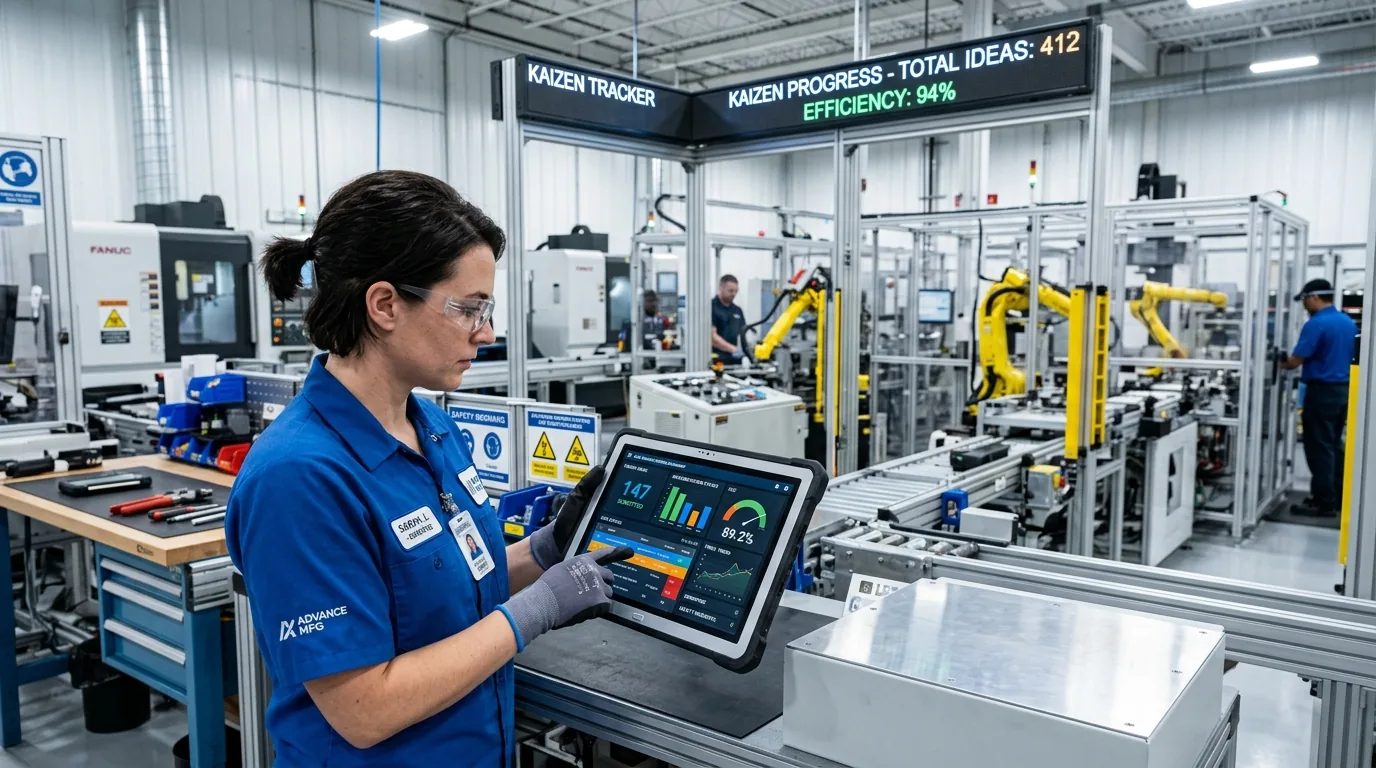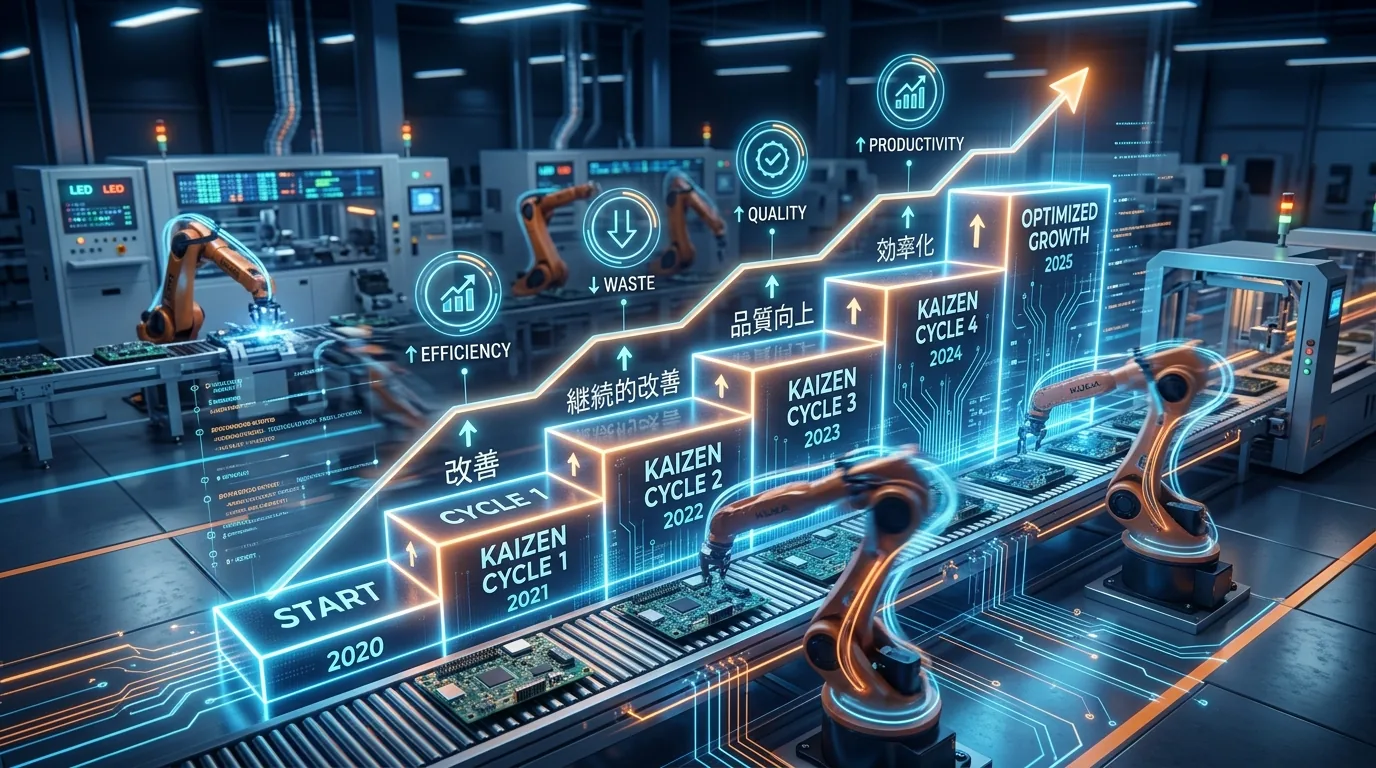
Most organizations don't have a shortage of good ideas — they have a shortage of systems that actually capture and act on them. Frontline employees see inefficiencies, safety risks, and waste every day, but without a structured way to submit and track those observations, valuable insights get lost. A Kaizen Management System solves this by giving every employee, at every level, a clear path from "I noticed something" to "we fixed it."
The Engagement Problem Hiding in Plain Sight
Employee engagement surveys consistently show that people want to feel heard and see their contributions matter. Yet in many industrial workplaces, the process for submitting an improvement idea is either nonexistent or so cumbersome that employees stop bothering. A suggestion box that's never opened sends a clear, if unintended, message.
Digital Kaizen platforms flip this dynamic. When an employee submits an idea through a mobile app — complete with a description, root cause, proposed solution, and even a supporting photo — and can then track its status through Pending, Approved, Implemented, and Standardized stages, they experience direct feedback on their contribution. That visibility is itself a powerful engagement driver.
Workforce Transparency
Transparency is often the single biggest factor in sustaining participation over time. When status updates are clear, employee trust soars.
How the Workflow Builds Trust
A well-structured Kaizen workflow typically involves several roles working together:
- Employees submit ideas with supporting details and evidence photos.
- Department managers provide first-level review, approving, rejecting, or requesting more information.
- EHS & Operations administrators perform final verification and move approved ideas through implementation and standardization.
- Directors & Executives monitor trends, cost savings, and engagement KPIs without micro-managing.
Turning Ideas into Measurable ROI
Beyond engagement, structured Kaizen data delivers real financial value across three primary dimensions:
1. Quantifying Cost Savings
When every submission captures an estimated cost or savings figure, leadership can aggregate this data to show the cumulative financial impact of the continuous improvement program — a number that matters enormously when justifying budget for plant quality initiatives.
2. Identifying Recurring Problems
Analyzing Kaizen submissions across departments often reveals patterns — the same production bottleneck, the same recurring defect, or the same tool shortage — that individual teams might not notice in isolation. Centralized reporting turns scattered observations into strategic insight.
3. Standardizing What Works
When an implemented Kaizen proves effective, marking it "Standardized" signals that the fix should be rolled out to similar processes or departments elsewhere in the organization, multiplying the return on investment.
Practical Example: Scaling One Good Idea
A department manager approves a Kaizen idea that reduces material waste on one production line by adjusting a cutting process. After the admin verifies the results and standardizes the change, the same adjustment is applied to three other lines with similar equipment. What started as one employee's observation becomes a plant-wide efficiency gain — and that employee's name stays attached to the idea that started it all.
Actionable Tips for Maximizing Engagement and ROI
- Keep submission fast. Long forms discourage participation — capture the essentials and let detail be added later if needed.
- Close the feedback loop. Notify employees when their idea changes status, especially when it's implemented.
- Report savings back to teams. Share aggregated cost-savings data at team meetings to reinforce the value of participation.
- Recognize standardized ideas. Publicly acknowledging ideas that scale across the organization reinforces a culture of continuous improvement.
Conclusion
A Kaizen Management System does more than digitize paperwork — it builds a feedback loop that keeps employees engaged and gives leadership the data to prove the financial value of continuous improvement.
Want your team's ideas to go further?
See how KMS structures Kaizen workflows, tracks cost impact, and keeps every employee in the loop.
Explore KMS Platform