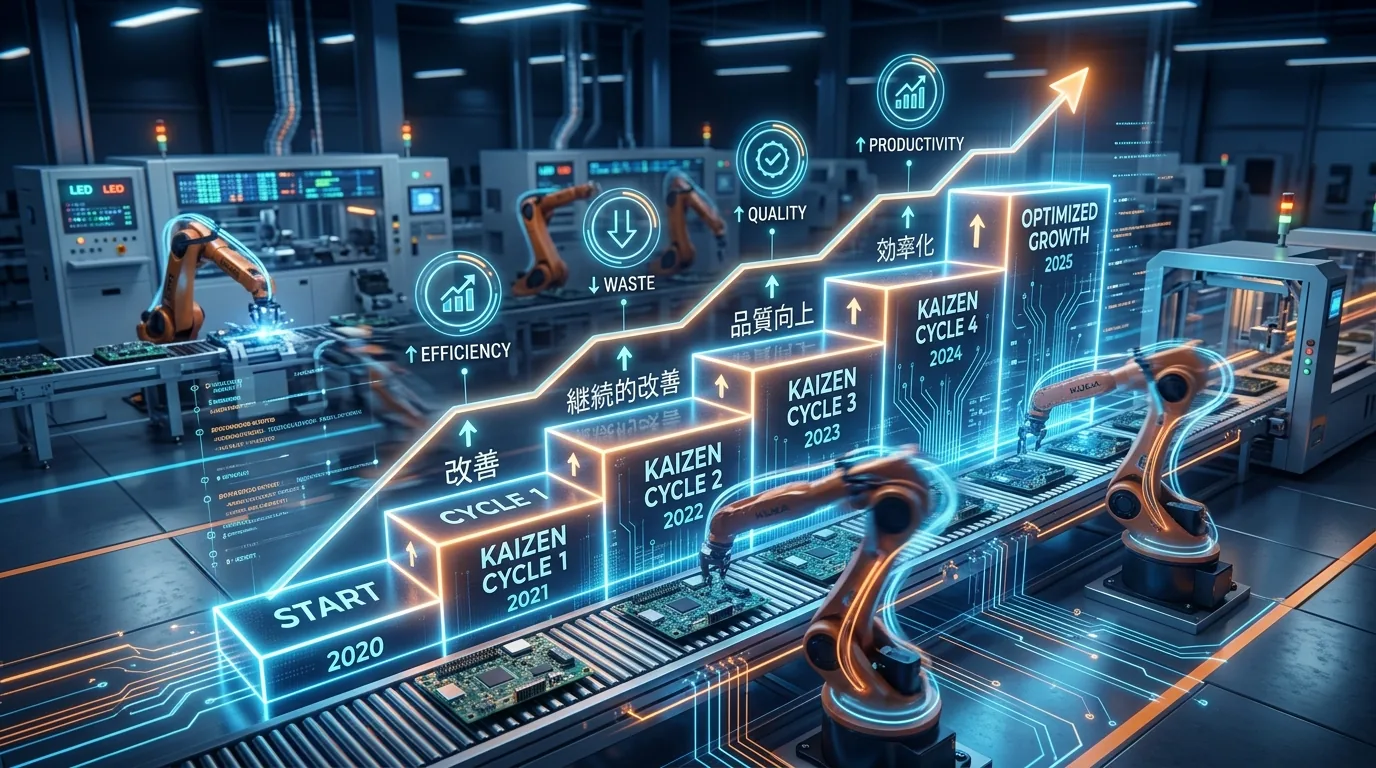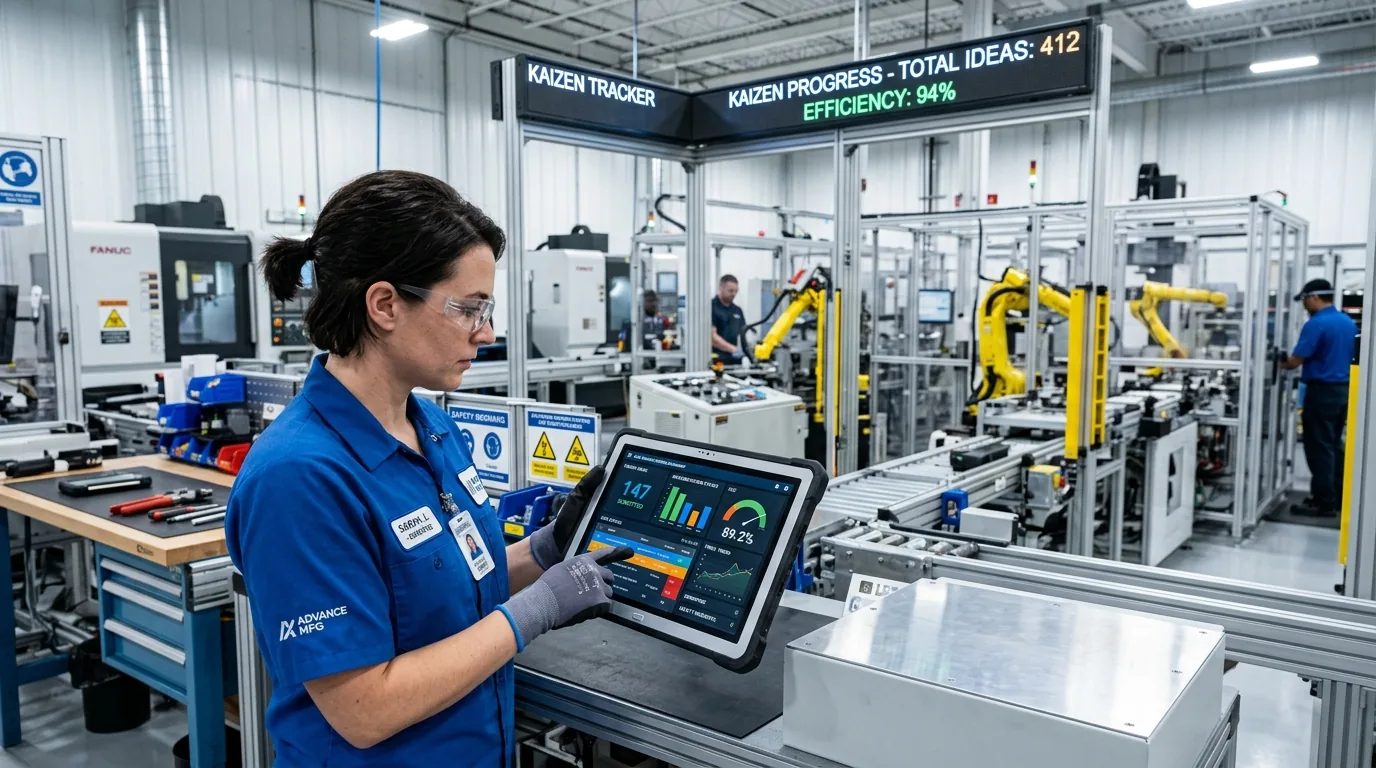
Continuous improvement has always been at the heart of operational excellence, but the way organizations capture, track, and act on improvement ideas has changed dramatically. Paper suggestion boxes and scattered spreadsheets are giving way to structured Kaizen Management Systems that turn everyday employee observations into measurable business results.
For manufacturing plants, warehouses, and industrial organizations, this shift isn't just about technology for its own sake — it's about closing the gap between "we have a good idea" and "we actually did something about it."
Core Principle
Digital Kaizen removes the friction between identifying a shop-floor inefficiency and standardizing a permanent fix across your organization.
What Is a Kaizen Management System?
A Kaizen Management System is a digital platform that structures the entire lifecycle of a continuous improvement idea — from submission and departmental review to approval, implementation, and standardization. Instead of relying on memory, email threads, or paper forms, employees log ideas directly into the system with supporting details such as the problem statement, root cause, proposed solution, and expected cost impact.
Modern platforms also support photo and video evidence, so a shop-floor worker can visually document a hazard, a bottleneck, or an inefficient process step at the moment they notice it — not hours later when the details have faded.
Why Digital Transformation Matters for Continuous Improvement
1. Faster Idea-to-Action Cycles
When a Kaizen idea is submitted digitally, it moves through a defined workflow: department manager review, EHS or operations verification, and final implementation tracking. Each stage is time-stamped and visible, which means ideas no longer sit forgotten in someone's inbox. Organizations that digitize this workflow typically see submission-to-approval times drop significantly compared to manual processes.
2. Data-Driven Decision Making
A digital system doesn't just collect ideas — it generates data. Dashboards showing the number of Kaizens submitted, approved, implemented, and standardized give leadership a real-time pulse on improvement activity across departments. This visibility helps identify which teams are actively engaged and which processes generate the most recurring issues.
3. Role-Based Accountability
A well-designed Kaizen platform reflects how organizations actually work. Employees submit ideas, department managers provide the first layer of review, and operations administrators handle final verification and standardization, while directors and executives get read-only visibility into trends. This role-based structure ensures accountability at every step without creating bottlenecks.
Practical Business Benefits
- Cost reduction: Structured cost-impact fields on every submission make it easier to quantify savings from implemented ideas, which strengthens the business case for continuous improvement programs.
- Waste reduction: Recurring themes in submissions (material waste, rework, downtime) become visible in aggregate reporting, helping teams target root causes instead of symptoms.
- Employee engagement: When employees see their ideas move from "Pending" to "Approved" to "Implemented," they experience a tangible return on their participation — a proven driver of engagement in lean and Kaizen cultures.
- Audit-ready reporting: PDF and Excel export capabilities mean improvement history is always available for internal reviews, ISO audits, or client inspections.
A Practical Example
Consider a shop-floor employee who notices that a particular assembly step frequently causes minor rework. Using a mobile Kaizen app, they submit an idea with a short description, a photo of the issue, and a suggested fix. Their department manager reviews it within a day, approves it for further evaluation, and the operations admin verifies the fix before it's rolled out across similar production lines and marked as "Standardized." What used to be an idea mentioned in passing during a shift is now a documented, implemented, and repeatable improvement — with a clear record of who contributed it.
Getting Started with Digital Kaizen Management
Organizations moving from manual to digital Kaizen management should focus on three things: making submission effortless (mobile-first, minimal required fields), keeping the review workflow simple enough that managers don't see it as extra work, and reporting improvement metrics back to employees so they see the impact of their contributions.
Conclusion
A structured Kaizen Management System gives organizations the visibility, accountability, and data they need to build a genuine culture of continuous improvement.
Ready to see how a digital Kaizen Management System could work for your organization?
Explore how KMS brings structured continuous improvement, visual reporting, and role-based workflows together in one platform.
Request a Demo